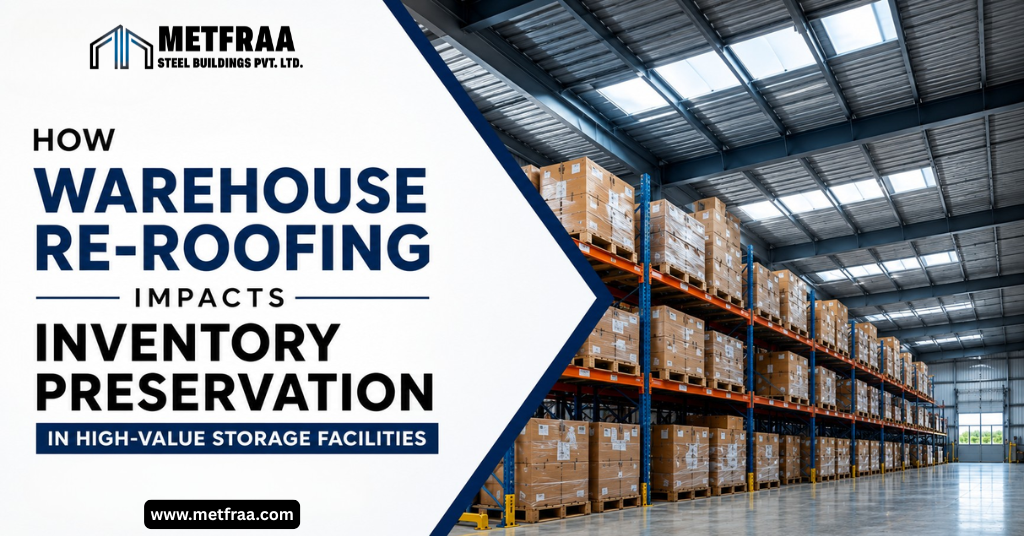
Warehouse re-roofing plays a vital role in protecting valuable inventory and maintaining a safe, efficient storage environment. For warehouses storing pharmaceuticals, electronics, automotive components, industrial equipment, and other high-value products, the condition of the roofing system directly impacts product quality, operational efficiency, and asset preservation.
Over time, exposure to weather conditions, moisture, thermal movement, and environmental pollutants can lead to roof leaks, corrosion, insulation deterioration, and other roofing issues. These problems can result in water intrusion, humidity fluctuations, contamination risks, and temperature instability, all of which can negatively affect stored inventory and increase operational costs.
Investing in warehouse re-roofing helps restore roofing performance, improve weather protection, enhance energy efficiency, and reduce maintenance requirements. More importantly, it supports long-term inventory preservation by creating a stable and reliable storage environment for valuable goods.
Why Warehouse Re-Roofing Is Critical for Inventory Preservation
A warehouse roof serves as the primary barrier between valuable inventory and external environmental conditions. When roofing systems begin to deteriorate, the risk of product damage, operational disruptions, and maintenance expenses increases significantly.
Warehouse re-roofing helps restore the building envelope by improving weather resistance, reducing moisture intrusion, and strengthening overall roofing performance.
Key benefits include:
- Better protection against water ingress
- Improved temperature regulation
- Enhanced humidity control
- Reduced contamination risks
- Increased structural reliability
- Improved operational continuity
For facilities that depend on consistent storage conditions, maintaining a high-performing roofing system is essential for inventory preservation.
How Does Warehouse Re Roofing Improve Inventory Preservation?
Warehouse re-roofing protects inventory by minimizing environmental threats that can affect product quality and storage conditions.
Prevents Water Damage
Water leaks are among the most common causes of inventory loss in industrial warehouses. Moisture can damage packaging, corrode metal products, and affect sensitive equipment.
By replacing deteriorated roofing components and improving waterproofing performance, warehouse re-roofing helps reduce the likelihood of water-related inventory damage.
Controls Humidity Levels
Excess humidity can negatively impact a wide range of products, including pharmaceuticals, electronics, paper-based materials, and precision equipment.
Modern industrial roofing systems help maintain a more controlled storage environment by reducing moisture infiltration and improving insulation performance.
Maintains Stable Indoor Temperatures
Temperature fluctuations can affect product quality and increase energy consumption.
Warehouse re-roofing often includes upgraded insulation systems that help:
- Reduce heat transfer
- Improve thermal efficiency
- Lower cooling costs
- Support product quality protection
Minimizes Contamination Risks
Damaged roofing sheets and deteriorated flashings can allow dust, debris, and airborne contaminants to enter storage facilities. Using high-quality roofing sheets designed for industrial warehouses improves weather resistance, minimizes leaks, and supports long-term roof performance.
A properly restored roofing system helps create a cleaner environment that supports inventory loss prevention and product quality protection.
Common Inventory Risks That Industrial Roof Upgrades Help Prevent
Water Intrusion and Product Deterioration
Even minor roof leaks can result in:
- Damaged inventory
- Corrosion of stored materials
- Packaging failure
- Product contamination
Addressing roofing issues early helps prevent these avoidable losses.
Condensation-Related Problems
Condensation often forms when roofing systems lose their thermal efficiency.
This can lead to:
- Rust formation
- Mold growth
- Equipment damage
- Reduced product lifespan
Structural Deterioration
Aging roofs can contribute to corrosion and degradation of supporting structural components.
Warehouse re-roofing helps reduce these risks while supporting long-term building performance.
What Is Warehouse Re-Roofing?
Warehouse re-roofing involves replacing, upgrading, or restoring an existing roofing system to improve performance, durability, and weather resistance.
Unlike recurring patch repairs that provide temporary relief, warehouse re-roofing addresses underlying roofing issues and delivers long-term improvements in facility performance.
Typical re-roofing projects may include:
- Metal roofing sheet replacement
- Fastener upgrades
- Roof waterproofing improvements
- Gutter and flashing replacement
- Roof insulation enhancements
- Corrosion protection measures
These improvements contribute to better inventory protection and a longer roof lifespan.
Key Benefits of Warehouse Re-Roofing for High-Value Storage Facilities
Improved Asset Preservation
Protecting valuable inventory is one of the primary reasons organizations invest in warehouse re-roofing.
A well-maintained roofing system helps reduce exposure to moisture, contamination, and temperature-related damage.
Enhanced Energy Efficiency
Modern roofing upgrades can significantly improve thermal performance.
Benefits include:
- Reduced energy consumption
- Lower cooling costs
- Improved indoor comfort
- Better sustainability outcomes
Reduced Maintenance Requirements
Frequent roof repairs can become expensive and disruptive.
Warehouse re-roofing minimizes ongoing maintenance needs and improves operational reliability.
Extended Building Lifespan
Roofing improvements help protect the broader facility infrastructure, reduce deterioration, and support long-term asset management goals.
Engineering Factors to Consider Before Warehouse Re-Roofing
Successful warehouse re-roofing projects begin with a thorough understanding of the facility’s existing condition.
Structural Capacity Evaluation
Since every warehouse has its own structural steel framework, service history, and loading conditions, understanding the existing building condition is a crucial step before planning roof-related improvements.
Drainage System Assessment
Proper drainage is essential for preventing water accumulation and future roofing problems.
Corrosion Inspection
Identifying signs of corrosion allows facility owners to address deterioration before it affects structural integrity.
Fastener and Connection Review
Inspecting roofing fasteners and connections helps ensure long-term roof performance and weather resistance.
Insulation Performance Assessment
Evaluating insulation effectiveness helps identify opportunities to improve energy efficiency and environmental control.
How Structural Restoration Strengthens Long-Term Roof Performance
While roof replacement enhances protection from environmental exposure, many aging warehouses require structural restoration to improve durability, strengthen critical components, and support long-term building performance.
Structural restoration may include:
- Corrosion repair
- Structural strengthening
- Protective coatings
- Purlin replacement
- Steel rehabilitation
For older facilities, combining warehouse re-roofing with structural restoration often provides a more comprehensive and cost-effective solution.
Industries That Benefit Most from Warehouse Re Roofing
Pharmaceutical Warehouses
Require strict environmental control to protect sensitive products.
Electronics Storage Facilities
Benefit from improved humidity control and leak prevention.
Automotive Component Warehouses
Require protection against corrosion and moisture damage.
FMCG Distribution Centers
Need consistent storage conditions to maintain product quality.
Industrial Equipment Storage
Benefit from reduced contamination risks and improved environmental protection.
Signs Your Facility Needs Warehouse Re-Roofing
You may need a professional roof assessment if you notice:
- Recurring roof leaks
- Corroded roofing sheets
- Water stains on ceilings
- Excessive condensation
- Damaged insulation
- Rising energy costs
- Loose roofing fasteners
- Increasing maintenance expenses
Addressing these warning signs early can help prevent costly inventory losses.
Partner with Metfraa for Reliable Roofing Solutions
Industrial roofing projects demand careful planning, technical expertise, and execution strategies that minimize disruption to ongoing warehouse operations. Selecting the right partner is essential to ensure long-term roofing performance, structural reliability, and uninterrupted inventory protection.
Metfraa Steel Buildings offers comprehensive warehouse re-roofing, structural restoration, and industrial building rehabilitation solutions tailored to the unique requirements of warehouses, manufacturing facilities, logistics centers, and other industrial structures. From roof condition assessments and roofing upgrades to structural strengthening and corrosion protection, Metfraa delivers end-to-end solutions designed to enhance building durability and operational efficiency.
Whether your facility is facing recurring leaks, roof deterioration, corrosion issues, or increasing maintenance costs, Metfraa can help identify the most effective solution.
Ready to upgrade your warehouse roofing system? Contact the Metfraa team today to discuss your project requirements and explore customized re-roofing solutions.
Frequently Asked Questions
Q. How does warehouse re-roofing protect inventory?
Warehouse re-roofing protects inventory by preventing leaks, reducing humidity fluctuations, improving insulation, and minimizing contamination risks.
Q. How long does a warehouse re-roofing project take?
Project duration depends on facility size, roof condition, and project scope. Most industrial projects are completed in phases to minimize operational disruptions.
Q. Can warehouse re-roofing reduce energy costs?
Yes. Improved insulation and roofing materials help reduce heat transfer and lower cooling expenses.
Q. Is warehouse re-roofing better than repeated repairs?
In many cases, yes. Re-roofing addresses underlying issues and provides long-term performance benefits, whereas repairs often offer temporary solutions.
Q. What are the signs that a warehouse roof requires replacement?
Common indicators include recurring leaks, corrosion, damaged roofing sheets, insulation failure, and increasing maintenance costs.