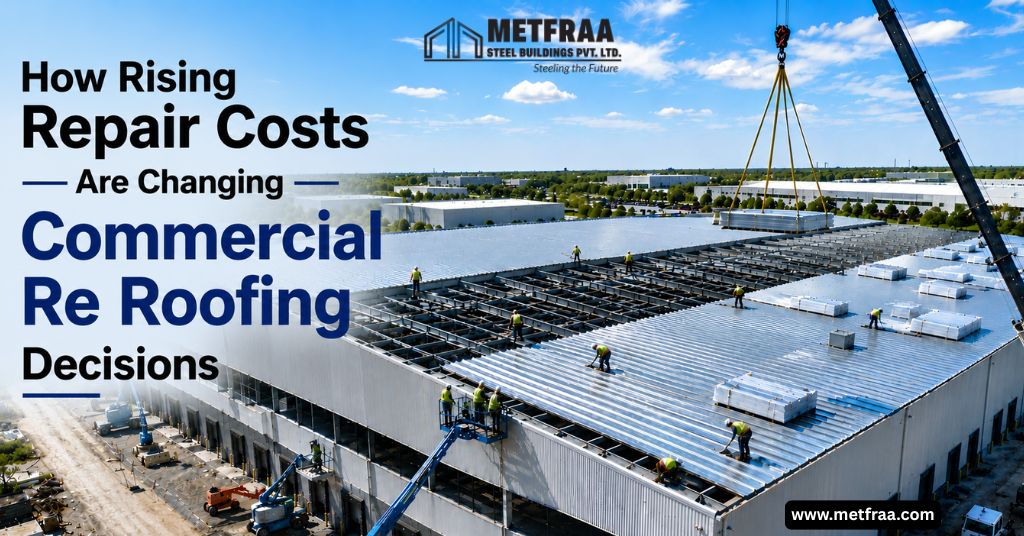
Commercial Re-Roofing is becoming a smarter long term investment as rising repair costs continue to impact commercial building owners. Instead of spending money on frequent roof repairs, many businesses are choosing re-roofing solutions to improve durability, reduce maintenance expenses, and protect their properties from future damage.
For many facility owners, the traditional approach was simple repair the roof whenever a problem appeared. Today, that mindset is changing. Rising labor costs, increasing material prices, recurring maintenance expenses, and business disruption risks are causing property owners to reassess their long-term roofing strategies.
As a result, commercial re-roofing decisions are increasingly being driven by lifecycle costs rather than short-term repair budgets.
The Growing Cost of Commercial Roof Repairs
The cost of maintaining aging roofing systems has increased significantly in recent years.
Several factors contribute to rising repair expenses:
- Higher labor costs
- Increased material prices
- Limited availability of skilled roofing technicians
- Escalating transportation expenses
- More stringent safety requirements
- Extended project timelines
For building owners, what was once a minor repair expense can now become a recurring financial burden.
Why Repeated Repairs Are Becoming Less Economical
A single repair may seem affordable. However, repeated repairs over several years can accumulate into substantial expenditures.
Common recurring issues include:
- Roof leaks
- Fastener failures
- Joint deterioration
- Corrosion-related damage
- Water ponding
- Insulation degradation
When these problems continue to reappear, facility managers often find themselves spending more on maintenance than they would on a planned re-roofing project.
Commercial Property Owners Are Looking at Lifecycle Costs
Modern asset management focuses on total ownership cost rather than immediate repair expenses.
Instead of asking:
How much will this repair cost
Building owners increasingly ask:
How much will this roof cost us the over next 10 years
This shift in thinking is changing how roofing investments are evaluated.
Lifecycle analysis typically considers:
- Future repair costs
- Maintenance frequency
- Energy efficiency
- Operational disruptions
- Expected service life
- Long-term return on investment
The Impact of Downtime on Roofing Decisions
For industrial facilities, warehouses, manufacturing plants, and logistics centers, roof failures can affect daily operations.
Consequences may include:
- Production interruptions
- Inventory damage
- Equipment exposure
- Safety concerns
- Customer service disruptions
The financial impact of operational downtime often exceeds the cost of the actual roof repair.
Because of this, many businesses are choosing proactive re-roofing solutions before significant failures occur.
Aging Roofs Often Hide Larger Problems
Visible leaks are rarely the only issue affecting an aging roofing system.
Underlying problems may include:
- Corroded roof sheets
- Deteriorated fasteners
- Moisture trapped within insulation
- Structural corrosion
- Failed waterproofing systems
Frequent repair activities may resolve visible roofing issues without eliminating the underlying causes of deterioration.
Comprehensive roof assessments frequently reveal that replacing the roofing system provides a more practical long-term solution.
How Energy Costs Influence Re-Roofing Decisions
Energy efficiency has become a major consideration for commercial building owners.
Older roofing systems may contribute to:
- Increased heat gain
- Higher cooling loads
- Reduced thermal performance
- Increased HVAC operating costs
Modern roofing solutions often incorporate:
- Better insulation systems
- Reflective roof coatings
- Improved ventilation design
- Energy-efficient roofing materials
These upgrades can reduce operating expenses throughout the life of the building.
The Rise of Preventive Capital Planning
Organizations are increasingly shifting from reactive maintenance to planned capital improvement programs.
Rather than waiting for roof failures, facility managers now schedule roofing upgrades based on:
- Roof age
- Condition assessments
- Maintenance history
- Budget planning cycles
- Future expansion plans
This proactive approach allows businesses to manage costs more effectively and avoid emergency repair situations.
Why Metal Roofing Is Gaining Attention
Many commercial property owners are evaluating metal roofing system
when planning roof replacements.
Modern metal roofing solutions offer:
- Long service life
- Reduced maintenance requirements
- Improved weather resistance
- Better structural performance
- Enhanced energy efficiency
For warehouses, factories, logistics facilities, and industrial buildings, these benefits can support long term cost control strategies.
Risk Management Is Becoming a Key Driver
Commercial roofing decisions are no longer based solely on maintenance costs.
Risk assessment is now a key consideration when evaluating long-term roofing strategies.
Decision-makers consider:
- Water intrusion risks
- Business interruption exposure
- Asset protection requirements
- Compliance obligations
- Employee safety concerns
A planned re-roofing project often reduces these risks more effectively than ongoing patch repairs.
Insurance and Compliance Considerations
Older roofs can create challenges when it comes to insurance and facility compliance.
Issues may include:
- Increased insurance scrutiny
- Higher risk assessments
- Maintenance documentation requirements
- Regulatory compliance concerns
In some cases, replacing aging roofing systems can improve insurability and reduce long-term risk exposure.
Modern Re-Roofing Solutions Minimize Business Disruption
One concern many building owners have is operational disruption during roof replacement.
However, modern re-roofing strategies are designed to minimize impact through:
- Phased installation programs
- Section-by-section replacement
- Off-hour work schedules
- Detailed project planning
- Enhanced safety management
This allows businesses to continue operating while roofing upgrades are completed.
Factors Facility Managers Evaluate Before Re-Roofing
Before making a final decision, facility managers typically review:
Roof Age
Older roofing systems generally require more frequent repairs.
Repair Frequency
Increasing maintenance calls often indicate broader system deterioration.
Annual Maintenance Costs
Rising maintenance budgets can signal that replacement may be more economical.
Structural Condition
The condition of supporting roof components influences replacement planning.
Energy Performance
Improving thermal efficiency can contribute to long-term savings.
Signs It May Be Time to Consider Re-Roofing
Commercial property owners should consider a professional roof assessment when they notice:
- Frequent leaks
- Visible corrosion
- Fastener failures
- Damaged roof sheets
- Rising maintenance costs
- Persistent water ponding
- Declining energy efficiency
Addressing these issues proactively often prevents larger expenses in the future.
The Future of Commercial Roofing Investments
As repair costs continue to increase, more organizations are shifting their focus toward long-term asset management.
Rather than viewing roofing as a maintenance expense, businesses increasingly see it as a strategic investment that supports:
- Operational continuity
- Energy efficiency
- Risk reduction
- Facility value
- Budget predictability
This trend is expected to continue as commercial building owners prioritize lifecycle performance over short-term repairs.
Conclusion
Rising repair costs are fundamentally changing commercial re-roofing decisions. What once appeared to be a cost-saving approach through repeated repairs is increasingly being viewed as a short-term solution that can create larger financial and operational challenges over time.
By evaluating lifecycle costs, operational risks, energy performance, and maintenance history, facility owners can make more informed roofing decisions that support long-term business objectives.
For many commercial and industrial buildings, a well-planned re-roofing project is no longer simply a replacement expense; it is an investment in reliability, efficiency, and future operational performance. For project consultations, roofing assessments, or re-roofing solutions, visit the Metfraa Contact Page.
Frequently Asked Questions (FAQs)
Why are commercial roof repair costs increasing?
Repair costs are rising due to higher labor rates, increased material prices, transportation expenses, safety requirements, and skilled labor shortages.
When should a commercial roof be replaced instead of repaired?
Replacement is often considered when repairs become frequent, maintenance costs continue to rise, or the roofing system approaches the end of its service life.
How does re-roofing improve energy efficiency?
Modern roofing systems often include improved insulation, reflective surfaces, and better ventilation that can reduce cooling and energy costs.
What industries benefit most from commercial re-roofing?
Warehouses, manufacturing facilities, logistics centers, industrial plants, commercial buildings, and distribution centers often benefit from proactive roofing upgrades.