Industrial construction in 2026 is focused on durability, efficiency, sustainability, and long-term structural performance. Among the many engineering factors that influence industrial steel structures, thermal expansion remains one of the most important. Temperature fluctuations can significantly affect steel buildings, especially large-span industrial facilities exposed to continuous environmental changes.
In Pre-Engineered Metal Buildings, steel components naturally expand during high temperatures and contract during cooler conditions. If this thermal movement is not properly managed, it can lead to roof leakage, structural stress, connection failures, and higher maintenance costs.
Today, engineers use advanced design techniques, thermal analysis, expansion joints, and modern roofing systems to reduce these risks and improve building performance.
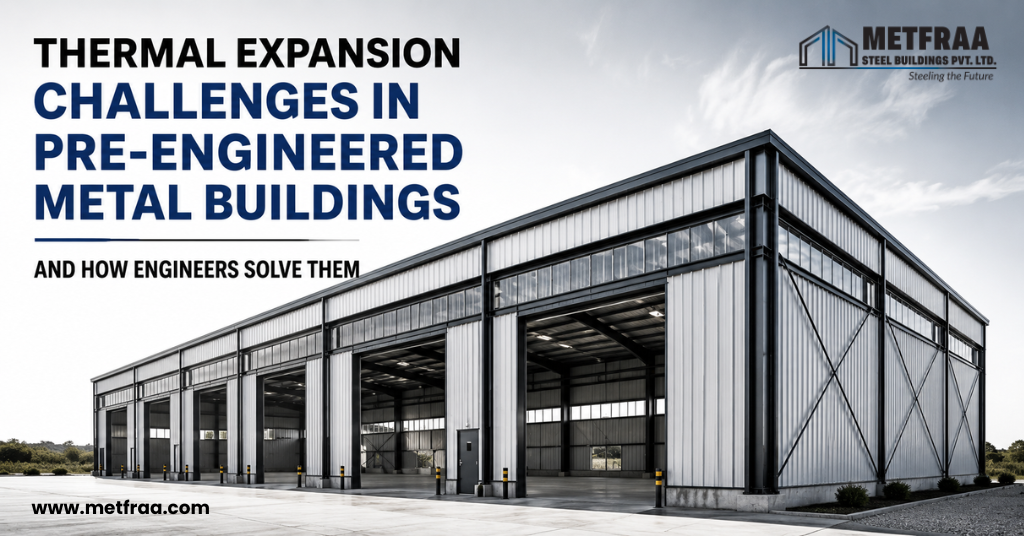
Thermal expansion in Pre-Engineered Metal Buildings occurs when steel expands and contracts due to temperature changes. Engineers solve this issue using expansion joints, flexible roofing systems, thermal analysis, and advanced structural design methods to improve durability and long-term performance.
What Causes Thermal Expansion in Pre-Engineered Metal Buildings?
Thermal expansion happens because steel reacts to temperature changes. When exposed to heat, steel expands slightly. When temperatures decrease, the steel contracts. Although the movement may seem minimal, it becomes significant in long-span industrial structures.
In Pre-Engineered Metal Buildings, components such as:
are continuously exposed to sunlight, rain, humidity, and seasonal temperature variations.
For example, metal roofs in industrial facilities can become extremely hot during summer afternoons. As temperatures change between day and night, repeated expansion and contraction cycles occur throughout the structure.
This is why thermal stress management is an essential part of modern industrial steel building design.
Why Thermal Expansion Matters in Pre-Engineered Metal Buildings
Unlike conventional concrete buildings, Pre-Engineered Metal Buildings use lightweight steel systems designed for faster construction and optimized structural efficiency. However, these lightweight systems are more sensitive to thermal movement if not engineered properly.
Several factors increase thermal expansion effects:
- Long-span roofing systems
- Large industrial roofing surfaces
- Continuous steel members
- High roof exposure to sunlight
- Lightweight structural framing
- Fast-track industrial construction methods
As a result, improperly designed buildings may experience:
- Roof leakage
- Structural fatigue
- Panel distortion
- Joint stress
- Fastener loosening
- Increased maintenance costs
This is why engineers perform thermal load calculations during the design stage of industrial steel structures.
Common Thermal Expansion Challenges in Pre-Engineered Metal Buildings
Roof Panel Expansion and Contraction in Pre-Engineered Metal Buildings
One of the most common thermal issues affects industrial roofing systems. Metal roofing sheets expand under heat and contract during cooler temperatures. Over time, this repeated movement can affect roof performance.
Common roofing problems include:
- Roof leakage
- Oil canning appearance
- Loose fasteners
- Panel deformation
- Expansion noise during temperature shifts
In large warehouse roofing systems, thermal movement becomes even more noticeable because of the extensive roof area.
This is why modern industrial roofing sheets are designed with flexible movement systems.
Structural Stress and Fatigue in Pre-Engineered Metal Buildings
Repeated thermal cycles can create stress at structural joints and steel connections. Over many years, this may weaken structural performance and increase fatigue in steel components.
Engineers often observe:
- Stress concentration near joints
- Connection deformation
- Frame misalignment
- Cracks in fastening areas
- Increased structural maintenance requirements
Therefore, thermal stress analysis has become an important part of modern PEB structure design.
Expansion Joint Problems in Pre-Engineered Metal Buildings
Expansion joints are designed to absorb thermal movement between building sections. However, poor joint detailing or incorrect spacing can create additional structural problems.
Improperly designed expansion joints may lead to:
- Sealant failure
- Water seepage
- Restricted movement
- Joint cracking
- Thermal stress accumulation
For large industrial steel structures, properly engineered expansion joints improve both durability and waterproofing performance.
Thermal Bridging and Condensation Issues
Steel is highly conductive, which means heat can easily transfer through structural components. This creates thermal bridging problems in industrial buildings.
As a result, facilities may experience:
- Higher indoor temperatures
- Energy loss
- Condensation buildup
- Moisture-related corrosion
- Reduced insulation efficiency
Modern Pre-Engineered Metal Buildings, therefore, require insulated roofing systems and energy-efficient wall panels to improve thermal performance.
Advanced Roofing Systems for Pre-Engineered Metal Buildings
Modern industrial roofing systems are specifically engineered to accommodate thermal movement.
Standing seam roofing systems are widely preferred because they allow roof panels to expand and contract without damaging the fastening system.
These advanced roofing systems include:
- Sliding clips
- Floating roof panels
- Concealed fasteners
- Flexible movement mechanisms
As a result, engineers can significantly reduce roof leakage and structural stress.
Furthermore, energy-efficient roofing solutions also improve indoor thermal comfort and reduce operational costs.
Structural Analysis and Thermal Simulation
Today, engineers use advanced software to design Pre-Engineered Metal Buildings more accurately.
Modern technologies include:
- Finite Element Analysis (FEA)
- Thermal load simulation
- BIM-based structural modeling
- Wind and temperature analysis
- Digital structural performance monitoring
These tools help engineers predict thermal movement before construction begins. Consequently, structural optimization becomes more precise and reliable.
Material Selection Strategies for Pre-Engineered Metal Buildings
Material selection plays a major role in reducing thermal expansion challenges.
Engineers commonly use:
- High-performance steel grades
- Galvanized structural steel
- Reflective roof coatings
- Insulated metal panels
- Corrosion-resistant protective coatings
These materials improve:
- Heat resistance
- Energy efficiency
- Structural durability
- Corrosion protection
- Long-term maintenance performance
In addition, insulated roofing systems help minimize thermal bridging inside industrial facilities.
Flexible Fastening and Connection Systems
Traditional rigid connections may fail under repeated expansion cycles. Therefore, engineers now use flexible fastening systems that allow controlled movement.
Common solutions include:
- Slotted bolt holes
- Sliding steel connections
- Flexible fasteners
- Thermal movement clips
These systems reduce stress concentration and extend the service life of roofing and structural components.
Importance of Climate-Based Design in Pre-Engineered Metal Buildings
Climate conditions directly influence thermal behavior in industrial steel structures. Buildings located in high-temperature regions experience greater thermal movement compared to moderate climate zones.
For hot industrial environments, engineers focus on:
- Reflective roofing systems
- Roof ventilation
- Heat-resistant coatings
- Thermal insulation systems
Similarly, coastal and humid regions require:
- Corrosion-resistant steel
- Waterproofing systems
- Anti-condensation protection
- Protective surface coatings
Climate-based engineering improves structural reliability and helps reduce maintenance costs over time.
Future Innovations in Pre-Engineered Metal Buildings
Industrial construction is rapidly evolving with smart and sustainable technologies.
Emerging innovations include:
- IoT-based structural monitoring systems
- Smart thermal movement sensors
- Cool roofing technologies
- Sustainable steel construction practices
- Advanced insulation systems
These technologies are helping engineers create safer, stronger, and more energy-efficient industrial steel buildings for the future.
Conclusion:
Thermal expansion is one of the most important considerations in industrial steel construction. Without proper engineering, temperature-related movement can affect the durability, safety, and efficiency of steel structures.
However, modern engineering solutions such as expansion joints, advanced roofing systems, flexible fastening methods, thermal analysis software, and climate-based design strategies help engineers effectively manage these challenges.
For businesses planning industrial projects, partnering with an experienced PEB manufacturer ensures better durability, reduced maintenance costs, and reliable long-term structural performance. To learn more about customized PEB solutions and industrial steel building services,
To learn more about customized PEB solutions and industrial steel building services, contact Metfraa Steel Buildings.
Frequently Asked Questions
Q. What is thermal expansion in Pre-Engineered Metal Buildings?
A. Thermal expansion in Pre-Engineered Metal Buildings refers to the natural expansion and contraction of steel caused by temperature changes. This movement affects roofing systems, structural frames, and steel connections.
Q. Can thermal expansion damage steel buildings?
A. Yes. If thermal movement is not properly managed, it can cause roof leakage, fastener loosening, structural fatigue, joint stress, and long-term maintenance issues in industrial steel structures.
Q. How do engineers reduce thermal stress in industrial buildings?
A. Engineers reduce thermal stress using expansion joints, standing seam roofing systems, flexible fasteners, insulated panels, and thermal load analysis software.
Q. Which roofing system is best for thermal movement?
A. Standing seam roofing systems are considered one of the best solutions because they allow roof panels to expand and contract freely without damaging fasteners or causing leakage