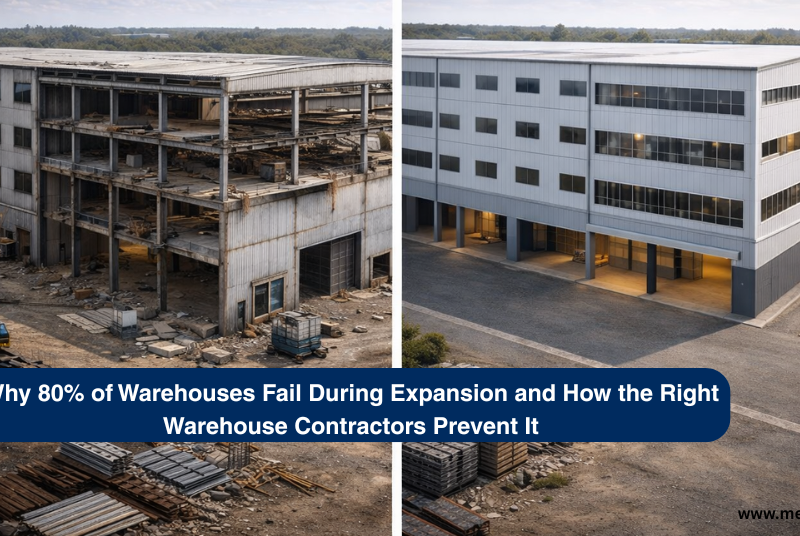

Industrial property owners mistakenly believe that they must demolish, rebuild, or modernize existing factories and warehouses to meet today’s needs. In reality, old structure restoration has become a smarter, faster, and far more cost-effective alternative, especially when combined with today’s low-cost prefab techniques.
Instead of starting from scratch, many companies today are improving existing industrial properties through upgrading their structures for better performance, regulatory compliance, and ease of use, all while avoiding delays in operation and incurring an unnecessarily high capital investment.
Why Is Old Structure Restoration Gaining Momentum in 2025?
Rising Land Values and Lengthened Approval Times, along with Disruptions to the Workplace, have altered the Industrial Expansion Planning Process has Been Altered. Older Facilities Present a Unique Opportunity Because They Retain Structurally Sound Foundations/Frames, Which Can Be Utilized to Restore Older Structures.
This shift has made old structure restoration a strategic choice rather than a temporary fix. When executed correctly, restoration allows businesses to modernize facilities while continuing operations, preserving both cash flow and productivity.
In addition, restoration is a sustainable approach because it minimizes waste (e.g., demolishing a structure) and carbon emitted during construction. Therefore, this methodology meets today’s ESG (environmental, social governance) and compliance expectations
Old Structure Restoration vs Starting From Scratch
Choosing restoration over rebuilding is often a business decision, not an engineering compromise.
How to Decide Between Old Structure Restoration and New Construction
Old structure restoration is typically the better option when:
- Foundations and primary columns remain structurally sound
- The existing footprint suits current operations
- Time and business continuity are critical
- Approvals and land constraints limit new construction
New construction, while sometimes necessary, often brings longer shutdowns, higher indirect costs, and extended return-on-investment timelines.
When Old Structure Revamping Makes Practical Sense
While there are a lot of old buildings, not all can be reused. A technical evaluation will indicate which ones are most likely to be successful for reuse purposes.
Indicators That Old Structure Revamping Is Viable
- No significant foundation movement or distress
- Corrosion levels are at acceptable levels
- The roof, cladding, and/or mechanicals may be old, but they can all be replaced
- The increased demands on the structure from the addition of new loads can be accommodated through reinforcement
In such cases, old structure revamping delivers strong value with controlled risk.
How Prefab Techniques Reduce Cost and Downtime During Restoration
Prefabricated construction technology, industrial renovations to be completed quickly and with less disruption.
Prefab Roofing Replacement
Roofs that have deteriorated or contain asbestos can now be replaced with:
- Pre-engineered metal roofing
- Insulated roof panels
- Modern drainage and gutter systems
These upgrades improve thermal comfort, leak resistance, and service life, often with minimal operational interruption.
Prefabricated Wall Cladding and Facade Upgrades
Lightweight, pre-fabricated wall systems do more than just replace an existing facade. They also improve building function by:
- Improving ventilation and daylight in the building.
- Improving the thermal performance of the wall systems.
- Enhancing the overall appearance of the building.
Such interventions are central to effective building rehabilitation, especially when facilities are being repositioned for higher-value use.
Prefab Steel for Structural Upgrades
Prefab steel elements can be used for:
- Column jacketing
- Beam strengthening
- Load redistribution
- Vertical or horizontal expansion support
This approach avoids extensive demolition while delivering precise structural improvements.
Integrating Services During Building Rehabilitation
Effective rehabilitation of existing structures includes more than just improving physical infrastructure
During building rehabilitation, well-planned restoration projects also upgrade:
- fire alarm detection and suppression systems
- electrical design/layout; energy-efficient lighting
- natural ventilating systems and smoke exhaust systems
- rainwater drainage/roof runoff containment systems
Integrating these services during restoration prevents repeated shutdowns later.
Cost Control and ROI in Old Structure Restoration
One of the major benefits of prefab-based rehabilitation of an existing structure is the predictability of the overall cost associated with the project.
Prefab systems help by:
- Reducing labor dependency
- Shortening execution timelines
- Limiting on-site uncertainties
When planned properly, restoration projects will provide an ROI at a quicker rate than newly constructed buildings, specifically with respect to the facility’s continued operation as a manufacturing operation.
Choosing the Right Team for Old Structure Restoration
Experience matters more than pricing in restoration projects.
Contractors must understand:
- Assess the structure for age
- Redistribute Loads from old to new
- Use pre-fabricated (prefab) products to integrate into existing frames.
Design-build specialists such as Metfraa Steel Buildings combine assessments, prefabricated Designs, and construction coordination (execution), all together, to minimize risk and enhance performance for a property over its lifetime.
Final Thoughts:
Restoring an existing structure is a strategic upgrade, not just patchwork repairs.Restoring an old structure, with proper assessments of conditions, creating thoughtful additional structural capacity, and utilizing modern prefabricated technologies, results in strategic upgrades, adding life to your asset, increasing efficiency, and protecting your capital.
If the core of your industrial building is structurally sound, then the best decision you will make in 2025 might be to modernize it instead of demolishing it. Connect with our team for all your building restoration needs and queries.
Frequently Asked Questions ( FAQ):
Q.Can industrial buildings be upgraded without stopping operations?
A.Yes. Prefab-based restoration allows phased execution, minimizing disruption to ongoing activities.
Q.Is structural restrengthening always required?
A.No. It depends on load changes, condition, and future usage. Many buildings need only selective reinforcement.
Q.How long does prefab-based restoration take?
A.Timelines vary, but restoration is typically 30–50% faster than full reconstruction.