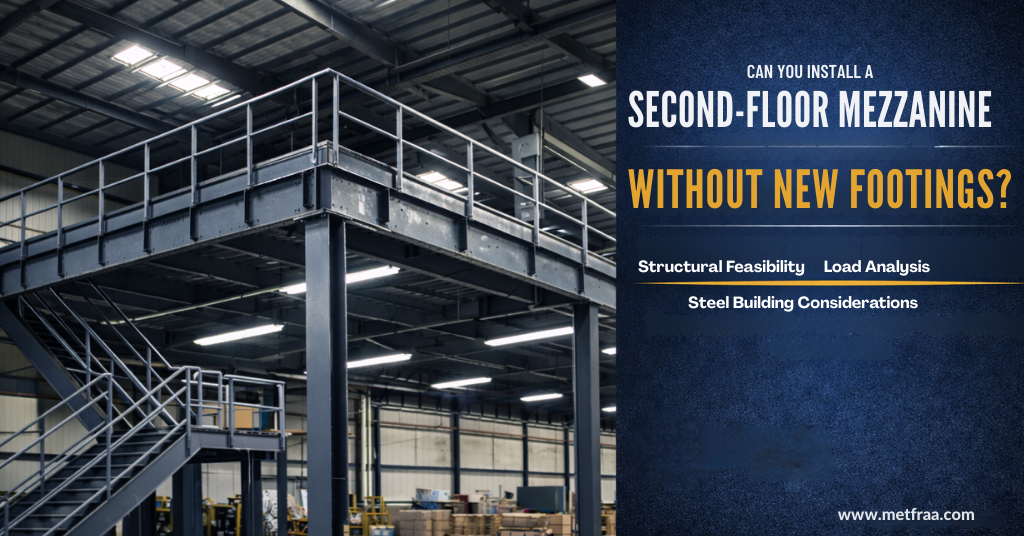
As land value climbs and layouts become tighter, several owners of industrial space are turning in the direction of the ceiling to utilise the additional area available. The next logical question is whether a second-level mezzanine can be constructed within a steel structure without needing to place any new footers.
The response is complicated, but generally speaking, the answer is “maybe.” By 2026, mezzanines will be easier to build than ever before, largely due to enhanced analysis and organization features, though their success will be determined by the original design of the steel building, the transfer methods of loads, and what the mezzanine will be utilized for.
When planning a mezzanine in a steel building, understanding load-bearing capacity and modular design is essential. Refer to how mezzanine systems are planned in PEB structures for guidance. See: Things To Know About Mezzanine Floor System For PEB Buildings
Why Mezzanine Floors Are Popular in Industrial Steel Buildings
- Mezzanines increase usable square footage without requiring additional construction. This feature appeals to industrial steel structures where downtime and permitting are expensive issues. Common uses of mezzanines in industrial settings include: storage, offices, control rooms, and light assembly operations.
- Mezzanines offer advantages over horizontal extensions, with the primary advantage being a shorter time frame from initiation through construction and less disruption to ongoing business operations. The downside is that structural integrity remains a primary concern for owners, especially when they want to avoid adding new civil footings.
How Do Mezzanine Floors Work in a Steel Building?
What Is a Mezzanine Floor in a Steel Building?
A mezzanine is an intermediate level installed within the clear height of a steel building. Structurally, it typically follows one of two load paths:
- Shared load path: mezzanine beams connect to existing columns, transferring loads to the original foundations.
- Independent load path: a free-standing mezzanine uses its own columns and beams, relying on slab and soil capacity.
Which path you choose largely determines whether new footings are required.
Mezzanine vs Multi-Storey Steel Building
A mezzanine floor is not the same thing as a multi-storey steel building. While mezzanine floors are much lighter than a multi-storey building with more than one floor and are designed to accommodate specific loads, multi-storey buildings are specifically designed and constructed with the full load of more than one floor in mind, as well as fire separation and means of egress. If your plans include heavy production or high occupancy levels, a multi-storey building may be your best long-term option for safety.
Can a Steel Building Support a Mezzanine Without New Footings?
When It Is Structurally Possible
It is possible for a steel building to accept an existing mezzanine structure without needing to create additional footing when:
- The existing columns and bases have residual capacity to accommodate the weight of an added mezzanine.
- The proposed load conditions on the added mezzanine are light to moderate in nature.
- The spacing of the columns and the way the load path is defined allow for the redistribution of the loads on the existing columns.
- The capacity of the soil to bear the new loads offers ample safety factors.
In these cases, careful detailing can share loads safely through existing members.
When New Footings Become Necessary
- When live loads exceed the originally designed live loads.
- When adding mezzanines for storage, which may introduce concentrated point loads into an already existing structure.
- Structural deficiencies, corrosion, or other limitations of the foundation due to the foundation’s age.
- When the purpose for which the building is used changes from that for which it was originally intended
Attempting to avoid providing footings in these situations will only increase the long-term liability associated with the structure.
Why Structural Assessment Is Non-Negotiable
Role of Steel Structural Building Design
The evaluation of a properly designed steel structure building includes an evaluation of:
- The column and beam loading capacity
- The foundation reserve capacity
- Extension and vibration limits
- Lateral stability and connections
This analysis clarifies whether reinforcement, redistribution, or new footings are required before construction begins.
How Engineers Decide What’s Feasible
Engineers will compare the original design loads with the proposed loads. They will confirm the present code-loading combinations, check the connection load capacities, and determine if they are functioning correctly. The use of assumptions will be replaced by calculations, which will ensure the safety of a project.
Load Type Matters More Than Floor Area
Storage, Office, and Production Mezzanines
Not all mezzanines behave the same:
- Office mezzanines: lighter loads; often feasible without new footings.
- Storage mezzanines: higher loads; foundation checks are critical.
- Production mezzanines: dynamic loads and vibration control become decisive.
This is why feasibility varies widely across industrial steel buildings.
Point Loads vs Distributed Loads
Point loads are greater than distributed loads. Therefore, concentrated loads from machinery or storage racks will create greater stress on a foundation than distributed loads. If possible, concentrated loads should never be placed on a mezzanine, as it may require replacement or modification of the foundation.
Mezzanine Installation Methods That Avoid New Footings
Using Existing Columns and Foundations
Mezzanine beams constructed of existing columns to share loads when sufficient capacity exists require accurate detailing and verified reserve capacity.
Free-Standing Mezzanines Inside a Steel Building
Mezzanines constructed as free-standing systems inside a steel-framed building do not require structural support from columns. However, the success of such a system is dependent upon the capacity of the slab and the soil beneath the slab. “Footing-free” does not equate to “load-free.”
What Happens If a Mezzanine Is Installed Without Structural Checks?
Skipping validation can lead to:
- Excessive vibration and deflection may occur
- Stress and cracks will develop in the foundation
- Non-compliance will occur with fire and egress codes
- Claims will be denied during insurance audits
These issues often surface months or years later when fixes are expensive.
Cost, Time, and Downtime Considerations
While costs associated with new civil footings will be eliminated and timelines shortened, along with eliminating disruptions from new construction, if the structure supporting the mezzanine does not have sufficient load capacity to support the additional weight, then the beneficial financial impacts will be lost almost as quickly. Cost versus verified capacity is the best balance to achieve.
Final Thoughts: Is a Footing-Free Mezzanine Possible?
Yes, a second-floor mezzanine can be installed in a steel building without new footings, but only when structural conditions allow it. The safest approach in 2026 is simple: analyze first, design second, build last. Done right, mezzanines unlock hidden capacity safely and sustainably without surprises later.
Mezzanines are successful when assessment, detailing, and execution are integrated. Contact Metfraa Steel Buildings, and we will assess the strengths of existing steel frames, verify their capacity, and provide mezzanine designs that meet all safety and performance requirements while expediting the construction process.
Frequently Asked Questions ( FAQ):
Q.Can an older steel building support a mezzanine?
A.Often yes if columns, foundations, and connections have reserve capacity verified by analysis.
Q.Is the slab strength enough to avoid new footings?
A.Not always. Slab thickness helps, but soil capacity and load paths are decisive.
Q.Do mezzanines affect fire approvals?
A. Yes. Egress, fire rating, and detection must be reviewed and upgraded if required.